
Identifying three crucial aspects of the Tai Ji Men case, understanding why it happened, and advocating for its solution.
by Wen Shang-Bin*
*A paper presented at the 8th Annual Conference of the East Asian Society for the Scientific Study of Religion (EASSSR), Kaohsiung, Taiwan, July 1, 2026.
An article already published in Bitter Winter on July 6th, 2026.
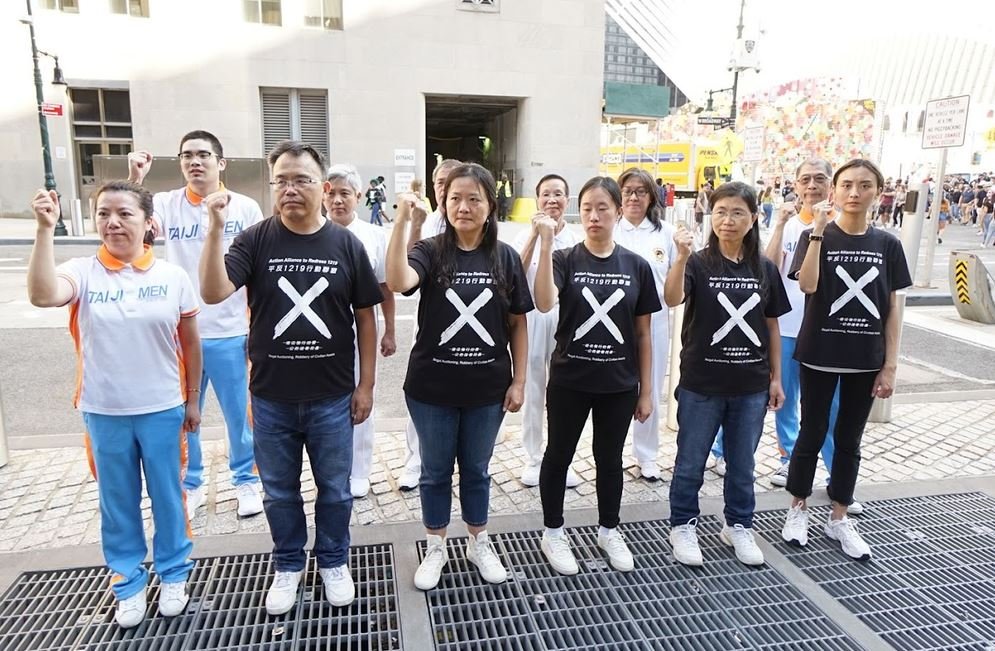
My name is Wen Shang-Bin. It is a great honor to be here today at Fo Guang Shan, a site widely regarded for its cultural and spiritual significance, to take part in the 8th Annual Conference of the East Asian Society for the Scientific Study of Religion.
Like other speakers in this session, I present an emic perspective on the Tai Ji Men case. I am a Tai Ji men dizi (disciple) who comes from the business world, where it is well understood that a fair, transparent, and predictable legal environment is essential for economic growth and social trust.
Like with other dizi, the Tai Ji Men case has been, for me, a personal and family experience. On the day after the case began in 1996, my aunt, Wen Xiu-zhen, spoke to the media to explain what Tai Ji Men was all about and our Qigong practice. Shortly thereafter, she was searched and questioned by the authorities. The intense negative media coverage caused severe strain within her family. Her husband, unable to understand the situation, reacted by restricting her movements whenever she visited Tai Ji Men. She bore this pressure alone. Her family life deteriorated, and she was demoted from her supervisory position at a publishing company. Under this stress, her health declined rapidly, and she passed away in 1999.
My aunt introduced our family to Tai Ji Men, and although we did not see each other daily, her influence remains deeply meaningful to me. Her story illustrates how systemic failures can harm individuals and families. This personal loss once caused us great pain and anger. However, our Shifu (Grand Master), Dr. Hong Tao-tze, emphasizes that spiritual practitioners should face adversity with kindness, courage, and discernment.
We chose not to respond with resentment. Instead, we seek to transform personal and familial suffering into motivation for institutional reform. Our efforts are not solely about restoring Tai Ji Men’s reputation; they are also about ensuring that future generations in Taiwan will not experience similar injustices.
This report is not merely an analysis of a single legal dispute. It reflects the experiences of my family and of many Tai Ji Men dizi who have sought redress for three decades. The methods used by certain officials in this case resemble patterns observed in other human rights controversies. Thus, while this presentation begins with our story, it also illustrates broader issues.
Religion has played a role in human history far beyond personal belief or spiritual comfort. From ancient societies to the contemporary world, it has shaped moral values, social cohesion, scientific development, and artistic expression. Yet, religious liberty remains precarious today even in democratic societies. Sam Brownback, former U.S. Ambassador-at-Large for International Religious Freedom, has emphasized that religious freedom should apply “for everybody, everywhere, all the time” and that governments have a responsibility to protect each person’s right to determine their own spiritual path. They do not always honor this responsibility.

Religion also plays a stabilizing role during periods of political transition. When societies undergo rapid change, religious and spiritual communities often help keep social cohesion. However, when governments encounter groups that do not align politically and resist being co-opted, they may perceive them as potential rivals or outsiders. Taiwan is often praised internationally as a democratic model in the Chinese-speaking world. Yet observers are often unaware that remnants of authoritarian administrative practices have long persisted within its tax and bureaucratic systems, also affecting religious and spiritual groups.
The essential features of the Tai Ji Men case have already been described in the previous papers of this session: the 1996 raid, the Supreme Court’s decision of 2007 that declared the Tai Ji Men defendants innocent of all charges, and the tax bureaucrats’ disregard of that decision that eventually led to the unjust nationalization of Tai Ji Men’s sacred land in 2020.
Former Minister of Finance Yen Ching-Chang stated on July 13, 2017, that administrative agencies had no justification for disregarding the facts established by the criminal courts. Yet the National Taxation Bureau did precisely this. It continued to impose tax bills on Tai Ji Men, relying on an interpretation of their activities that the Supreme Court had denied and discredited in the criminal case.
I propose a three-dimensional analysis of the Tai Ji Men case here. Its three essential dimensions are the nature of the contents of so-called red envelopes, the incomplete nature of transitional justice in Taiwan, and systemic problems in how the tax bureaucracy functions there.
First, the prosecutor who initiated the case based his accusation of tax fraud on a flawed analysis of the contents of the “red envelopes,” including monetary donations given by the dizi to their Shifu. The prosecutor claims that this content did not represent gifts but the taxable income of a cram school.
Several authorities and courts, up to the Supreme Court, concluded that there was no cram school and that these were, in fact, non-taxable gifts. Yet the National Taxation Bureau stubbornly ignored the judicial conclusions. It continued to impose bills based on the cram school theory, which eventually led to the nationalization of Tai Ji Men’s land in 2020. This raises a fundamental question: how can an administrative penalty issued without a proper legal basis be used to deprive citizens of property?
In traditional Chinese culture, Tai Ji Men—as an ancient menpai of qigong, martial arts, and self-cultivation—preserves a longstanding Shifu–dizi tradition. The red envelopes dizi voluntarily offers to their shifu are expressions of respect and gratitude and thus fall within the category of tax-exempt gifts. However, in pursuit of political objectives, the prosecutor reclassified this spiritual tradition as a commercial activity, labeling the gifts as tuition fees and treating them as taxable business income. It was a case of state interference in religious and spiritual life. If voluntary religious donations can be reinterpreted as business profits at the authorities’ discretion, then no religious or spiritual group can be assured of its autonomy. This constitutes a significant infringement on freedom of religion or belief.
The second main dimension of the case refers to transitional justice.
Although Taiwan has emphasized transitional justice in its democratic development, laws and regulations have focused primarily on political and criminal injustices, while largely overlooking abuses within the tax and administrative systems. During the authoritarian era, officials often presumed guilt before examining evidence. Unfortunately, this mindset did not disappear with democratization. Instead, it persisted within administrative structures, manifesting as bureaucratic authoritarianism in legal and tax procedures. The Tai Ji Men case, occurring in 1996 after the end of Martial Law, exemplifies this post-authoritarian pattern.
When defendants are repeatedly found innocent by the courts, yet their cases remain unresolved for decades, the administrative system begins to normalize the error. New officials may perpetuate the mistake to avoid acknowledging past wrongdoing or to evade responsibility. Over time, this institutional inertia creates a structural void in the legal system.

The previous speakers have already mentioned the third main dimension of the Tai Ji Men case. I return to it briefly. A fundamental structural issue lies in the “incentive payments” or tax bonus system. In a modern democracy, the salaries of government officials should be fixed by law. Yet Taiwan retains a system inherited from the authoritarian period: tax officials receive bonuses based on the amount of tax they assess or collect. This creates a conflict of interest by linking public authority to personal financial gain.
In the Tai Ji Men case, this system produced two problematic outcomes:
1. Abuse of power: To increase performance metrics and bonuses, officials may issue aggressive or erroneous tax assessments.
2. Resistance to correction: Once bonuses have been distributed and reputations are at stake, officials have little incentive to rectify mistakes. Review mechanisms often place the same agencies in the position of both adjudicating and defending their own decisions. This dynamic helps explain why the tax authorities have maintained their position despite repeated judicial clarification.
As I mentioned earlier, this case carries significant personal and family emotions for me. I can discuss it calmly today because, during the most difficult periods, our Shifu and his late wife encouraged us to maintain composure. Many dizi also spoke out publicly at a time when doing so carried significant personal risk.
Yet I believe that emic analyses of the Tai Ji Men case and personal testimonies may help address broader issues concerning the place of religion and spirituality in Taiwanese society and religious liberty in East Asia.
I thank the conference organizers for providing this opportunity, and I look forward to further dialogue to advance genuine freedom of religion or belief and strengthen human rights protections in Taiwan and throughout the world.