
A closer look at the 2026 ICCPR–ICESCR review reveals that key concerns went unanswered, while the decades-long Tai Ji Men injustice continues.
by Massimo Introvigne*
*A paper presented at the webinar “Special Report: International Review of the Two Covenants,” May 24, 2026.
An article already published in Bitter Winter on May 27th, 2026.
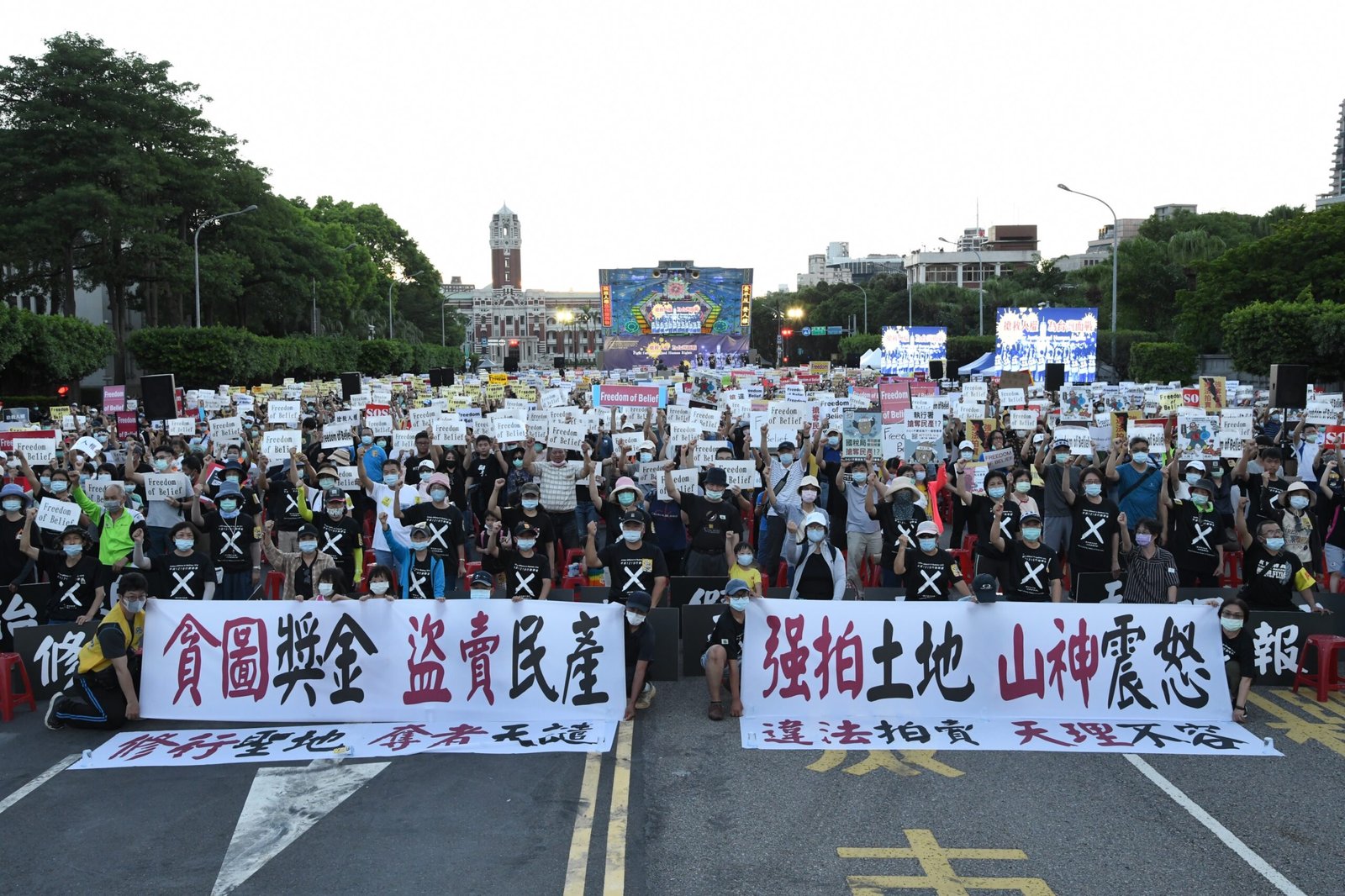
The International Covenant on Civil and Political Rights and the International Covenant on Economic, Social and Cultural Rights are often described as the backbone of the modern human rights system. States that ratify them accept not only a legal framework but a moral commitment: to ensure that rights are respected, remedies are effective, and institutions remain accountable. Taiwan, although not a member of the United Nations, voluntarily incorporated both Covenants into domestic law in 2009 and has since subjected itself to periodic reviews by independent experts. This year marked the fourth such review, a process that included the government’s official report and a series of shadow reports submitted by civil society organizations.
Among the most active contributors were the Tax and Legal Reform League and the Taiwan Chapter of the Association of World Citizens, joined by several academic and legal experts. Their submissions were detailed, well-documented, and focused on structural problems that have persisted for decades: weaponized taxation, ineffective remedies, disproportionate travel bans against suspected tax evaders, administrative discrimination against spiritual groups, and the near impossibility of obtaining justice in administrative courts. The Tai Ji Men case, now in its thirtieth year, was repeatedly cited as a paradigmatic example of these systemic failures.
The experts’ Concluding Observations, however, addressed only a fraction of these concerns. Across the entire document, the NGOs found that only paragraphs 115, 123, and 127 addressed issues they had raised. Paragraph 123, which deals with freedom of religion or belief, mentions conscientious objection to military service and the protection of privacy in religious activities. It does not address the long-standing problem of state interference with spiritual groups through taxation, nor the documented history of persecution and harassment on the island, of which the Tai Ji Men case is the most egregious example. Paragraph 127 addresses judicial independence but does not engage with the specific structural deficiencies of Taiwan’s administrative courts. Only paragraph 115, on travel bans, directly reflects the concerns raised by NGOs.
Paragraph 115 is indeed significant. It acknowledges that travel bans imposed by the Ministry of Finance raise serious human rights concerns and states: “the lawfulness and proportionality of travel bans must be assessed on an individual basis, subject to judicial review and periodically reviewed.” It further notes that, since Taiwan has not opted for prior judicial involvement, “respect for principles of proportionality and due process” must be ensured through ex post facto judicial review. This is a welcome development. For years, NGOs have documented cases in which individuals were prevented from leaving the island for years—sometimes more than a decade—based solely on disputed tax bills, often later corrected to zero.
Yet it is only one step. The broader concerns raised by civil society remain largely unaddressed: the endless cycle of recalculated tax bills even after taxpayers win in court; the administrative courts’ overwhelming bias in favor of the state; the misuse of taxation to target spiritual groups; the lack of effective remedies; and the disproportionate enforcement measures that have destroyed livelihoods, homes, and communities. These issues have names, faces, and histories. And no case illustrates them more clearly than that of Tai Ji Men.

For thirty years, Tai Ji Men—a qigong, martial arts, and self-cultivation movement—has been entangled in a legal and administrative nightmare. In 2007, Taiwan’s Supreme Court acquitted the defendants of all criminal charges and confirmed that monetary gifts offered by disciples to their Shifu (Grand Master) were tax-exempt. Five of the six tax years were eventually corrected to zero. Yet one disputed year remained, and based on that single year, the tax authorities seized and nationalized land intended for spiritual purposes. The Control Yuan, Taiwan’s highest supervisory body, has recognized the case as a major human rights violation. Scholars in Taiwan and internationally have studied it extensively. And yet, despite multiple rounds of administrative relief, injustice persists.
The Tai Ji Men case is not an isolated incident but part of a broader pattern. Taiwan has a documented history of state interference with religious and spiritual groups, from the suppression of Yiguandao in the 1950s and 1960s to the persecution of the New Testament Church’s Mount Zion community from 1974 to 1986. Since the mid-1990s, several spiritual movements have faced administrative discrimination, often through taxation. The Tai Ji Men case is simply the most visible and the most thoroughly documented. It exposes the deeper structural problems that the review process should have addressed: the lack of effective remedies, the misuse of administrative power, the absence of judicial oversight, and the failure to apply the Covenants consistently across all areas of litigation.
During the May 15 forum on the Concluding Observations, the NGOs reiterated these concerns. They noted that the number of participating NGOs had declined, reflecting widespread disappointment with the government’s implementation of previous recommendations. They welcomed the experts’ comments on travel bans but expressed concern that fair trial rights, judicial recusal, and administrative court deficiencies were not mentioned. They also highlighted the mischaracterization of religious gifts as taxable income, a practice that has parallels in Europe, where the European Court of Human Rights has ruled against discriminatory taxation of minority religious groups.

The experts responded that they had not previously paid particular attention to Taiwan’s administrative courts but considered the NGOs’ concerns important and hoped to receive more information in the future. This is encouraging, but it also underscores the limitations of the current review process. Taiwan is not part of any international judicial system. There is no regional human-rights court to which victims can appeal. The review mechanism relies on dialogue, persuasion, and moral pressure. When key issues are overlooked, the consequences are not merely academic. They affect real people who have no other avenue for justice.
This is why the Tai Ji Men case matters. It is not simply a tax dispute. It is a mirror through which the island’s broader human rights landscape can be understood. It reveals how administrative power can be misused, how remedies can fail, how courts can become inaccessible, and how spiritual minorities can be targeted through bureaucratic means. It shows how the absence of external oversight can allow injustices to persist for decades. And it demonstrates why civil society continues to insist that the Covenants must be applied fully, not selectively.
The 2026 review made progress on one important issue: travel bans. But on the deeper structural problems documented by NGOs—problems that have shaped the lives of thousands of citizens and that remain painfully visible in the Tai Ji Men case—the review fell short. The Covenants are not meant to be symbolic. They are meant to guide governance, protect rights, and ensure justice. For that to happen, the concerns raised by civil society must be addressed, not merely acknowledged. The Tai Ji Men case is not an anomaly. It is a warning. And until its lessons are taken seriously, the promise of the Covenants in Taiwan will remain unfulfilled.