
A new submission highlights abuses of fiscal authority against spiritual groups, revealing systemic weaknesses and persistent human rights concerns.
by Massimo Introvigne
An article already published in Bitter Winter on May 25th, 2026.

Some human rights cases vanish after a single news cycle. Others linger, returning periodically like a stubborn echo. And then there is Tai Ji Men—a case that has become a fixture in Geneva, reappearing so regularly that it now functions as a kind of institutional déjà vu. At the 61st session of the Human Rights Council, CAP‑LC submitted its twelfth intervention on the matter, warning that unresolved administrative injustices do not fade simply because authorities insist they are “closed.” As the 62nd session opens on June 15, CAP‑LC returns once again, with a broader message: the misuse of taxation against spiritual minorities and the recurrent violation of the Two Covenants to discriminate against spiritual minorities is a global pattern that the Council can no longer ignore.
The new written statement, titled “The Misuse of Tax Systems Against Spiritual Communities and the Two Covenants,” opens with a principle that should be obvious but is too often violated: taxation becomes a human rights issue when it is weaponized. CAP‑LC writes that taxation is legitimate only when it is not “selectively applied, used to punish unpopular groups, or weaponized to achieve objectives unrelated to fiscal policy.” The statement stresses that this problem “is not confined to one region,” and the examples it provides make the point.
Europe has already seen the consequences of discriminatory fiscal policy. The European Court of Human Rights has repeatedly condemned France for imposing disproportionate tax burdens on groups it labeled as “cults,” a term that, as CAP‑LC notes, carries “significant stigmatizing power” despite having no legal definition. The Court’s rulings reaffirm that taxation cannot be used as a substitute for criminal law or as a covert means to suppress freedom of religion or belief.
The statement then turns to Australia, where the Parliament of Victoria’s Inquiry into “cults” has sparked proposals to remove tax‑exempt status from religious or spiritual groups deemed socially controversial. CAP‑LC warns that such proposals risk creating a precedent in which “fiscal policy becomes a mechanism for ideological control.” When tax exemptions can be withdrawn not for misconduct but for contested labels, Articles 18 and 26 of the ICCPR are immediately implicated.
Download the statement in PDF (number and distribution date will be allocated later).
It is in this global context that CAP‑LC situates Taiwan. Although not a UN member state, Taiwan voluntarily incorporated the ICCPR and ICESCR into domestic law in 2009 and undergoes periodic expert reviews. During the most recent review, civil society submitted extensive documentation showing how taxation has been used in ways that disproportionately affect spiritual and cultural communities. Among these cases, Tai Ji Men remains the most emblematic.
For thirty years, the Tai Ji Men community has faced tax bills that courts repeatedly found unfounded. CAP‑LC recalls that “five of the six tax years involved were corrected to zero,” and that the Supreme Court confirmed the non‑taxable nature of disciples’ gifts. Yet the tax authorities continued issuing new assessments, ultimately seizing and nationalizing land intended for spiritual use. The Control Yuan has recognized the case as a major human rights concern, and scholars have described it as evidence of deeper structural flaws: the absence of effective remedies, the lack of judicial oversight in administrative enforcement, and the vulnerability of spiritual minorities to bureaucratic abuse.
The recent ICCPR–ICESCR review acknowledged only one aspect of these concerns: the disproportionate travel bans imposed on individuals accused of tax evasion while their cases are still pending. CAP‑LC quotes paragraph 115 of the Concluding Observations, which stresses that such restrictions must be “proportionate, individually assessed, and subject to judicial review.” But the statement notes that other systemic issues—“the endless cycle of recalculated tax bills, the structural deficiencies of administrative courts, and the discriminatory impact of tax enforcement on spiritual groups”—were left unaddressed.
The new statement makes clear that when taxation is used as a tool of discrimination, the harm “is not merely financial.” It affects the ability of communities to gather, transmit traditions, maintain places of worship, and exist without fear of arbitrary interference. It erodes public trust and undermines the rule of law.
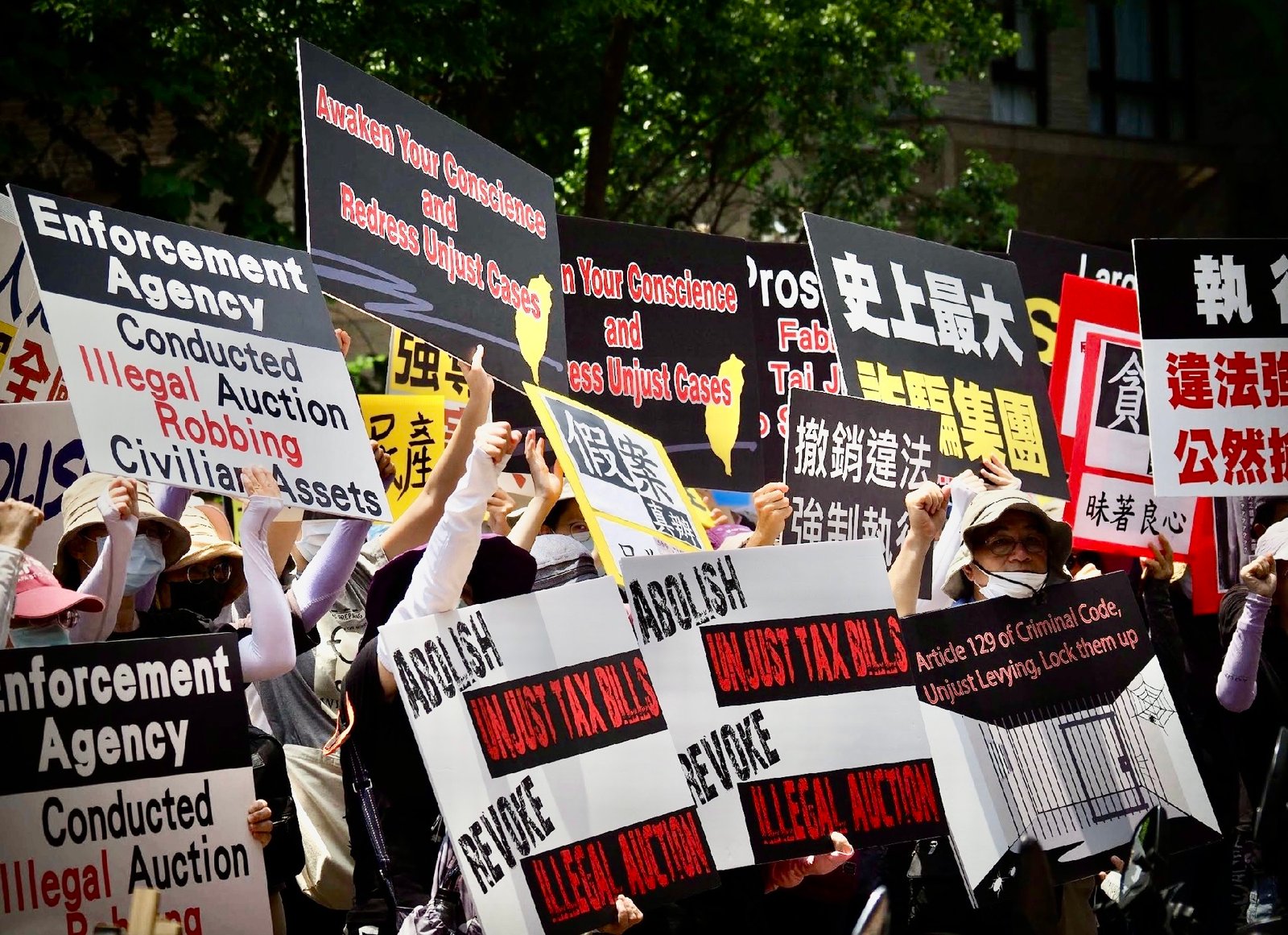
The conclusion is a direct appeal to the Human Rights Council: “Taxation must never be used as a weapon against minority spiritual or religious groups.” Fiscal policies must be neutral, based on objective criteria, and subject to effective judicial oversight. Property seizures, forced auctions, and travel bans must comply with necessity and proportionality. Administrative remedies must be accessible and effective. And above all, spiritual and cultural communities—whether in Europe, Australia, Taiwan, or elsewhere—must be protected from discriminatory fiscal practices that threaten their existence.
The warning echoes the message delivered at the 61st session: when administrative power is left unchecked, the rights guaranteed by the Two Covenants become fragile. The Tai Ji Men case continues to appear before the Human Rights Council not because civil society is repetitive, but because the injustice remains unresolved. And now, with CAP‑LC’s new statement, the Council is reminded that the misuse of taxation against spiritual minorities in breach of the Two Covenants is a global problem—one that will keep returning to Geneva until states confront it with the seriousness it demands.