
Unscrupulous journalists publish fake news about “cults.” Then they refuse to correct themselves.
by Willy Fautré
*Introduction to the webinar “Media Bias Against Spiritual Minorities and the Tai Ji Men Case,” co‑organized by CESNUR and Human Rights Without Frontiers on May 4, 2026, after the United Nations World Press Freedom Day (May 3).*
An article already published in Bitter Winter on May 9th, 2026.
Freedom of thought and expression is at the very heart of our democratic values, but words are not mere tools of communication; they can be sparks that ignite fires. Wars begin with words. A war of words precedes every physical war, and every act of violence is rooted in a prior act of verbal aggression.
This is what we are increasingly witnessing every day in the war against certain religious and spiritual minorities, including in our democratic countries.
Unscrupulous journalists and media outlets manipulate words, twist them, distort them, and even torture them to use them as weapons of destruction against peaceful religious and spiritual groups simply because they dislike them. Even worse, they do not hesitate to create headlines with outright lies to damage their reputation. Here are two very recent examples among many.
In France, in a case involving the rape of two teenage girls, the television channel “France 3” surprisingly headlined its news report on 24 April with the headline: “A man from the Jehovah’s Witness community traveled 1,000 km to rape two teenage girls in Quimper.”
In fact, it was not true that the sexual abuser was a Jehovah’s Witness. The French TV channel itself stated in the core of its own article that the perpetrator had been expelled from the Jehovah’s Witnesses’ community a long time ago after being sentenced twice in other cases of sexual assault to lengthy prison terms: six years and seven years.
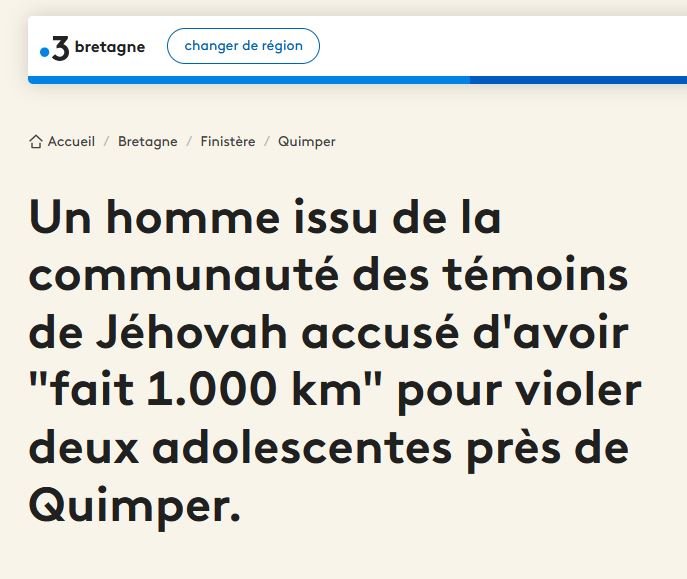
It is unusual for journalists and media to mention the religious affiliation of a perpetrator, and one can question the reason and motivation behind this choice by the editor‑in‑chief of the French TV channel. Such a headline is sensational but also destructive for a whole community. It is not just reader‑baiting by the media. It reinforces the stigmatization of an entire religious group, suspicion, hostility, hate speech, and hate crimes. It also negatively attracts the attention of political authorities, perhaps with the hope that they will sanction the group with specifically restrictive administrative measures or laws. No one expressed any word of protest against this destructive stigmatization.
Would a media outlet have dared to say the same thing about a Jewish or Muslim perpetrator of a sexual crime?
Another example. Again in France.
Three months ago, the Cassation Court issued a judgment in a case indirectly related to an infanticide by suffocation committed six years ago and for which the young mother had been sentenced to 25 years of imprisonment.
On the eve of the court hearing, the famous press agency AFP (Agence France‑Presse) wrote that the mother was “a member of the Jehovah’s Witnesses, describing herself as ‘very devout.’”
Far from being anecdotal, this reference was prominently placed by the tabloid “20 Minutes” in the subtitle of its article: “INFANTICIDE: A member of Jehovah’s Witnesses, the accused faces life imprisonment.” It was, however, not true.
Once more, one can wonder why a journalist of a well‑known French press agency published such non‑existent information and why it was important in his eyes to mention the alleged religious affiliation in this family tragedy.
The Fédération Chrétienne des Témoins de Jéhovah de France (Christian Federation of Jehovah’s Witnesses in France) decided to exercise a right of reply regarding the incorrect mention of their religious community in a criminal case.
They sent a very factual right-of-reply to the concerned editors to put an end to this attack on their honor. They asked them to publish this rectification: “Contrary to what was published in your media outlet, the person convicted by the Finistère Assize Court for the murder of her 5‑year‑old son is not a Jehovah’s Witness.”
Most of them agreed to publish it, except “20 Minutes” and “Paris Match,” two very popular tabloids. This failure reveals intentional hate speech.
In its fight for justice and truth, Jehovah’s Witnesses took the case to court, as high as the Cassation Court. In a final decision, the judges dismissed their claim, finding that the “legal entity” of the Jehovah’s Witnesses was not “named or identified” as such in the controversial articles.
At two levels, the religious community was penalized: by the press and by the judiciary.
This happens quite often, not only in France but also in many other European countries, despite their democratic safeguards.
Tai Ji Men has long experience of the disregard of truth by the media and of justice by the courts.
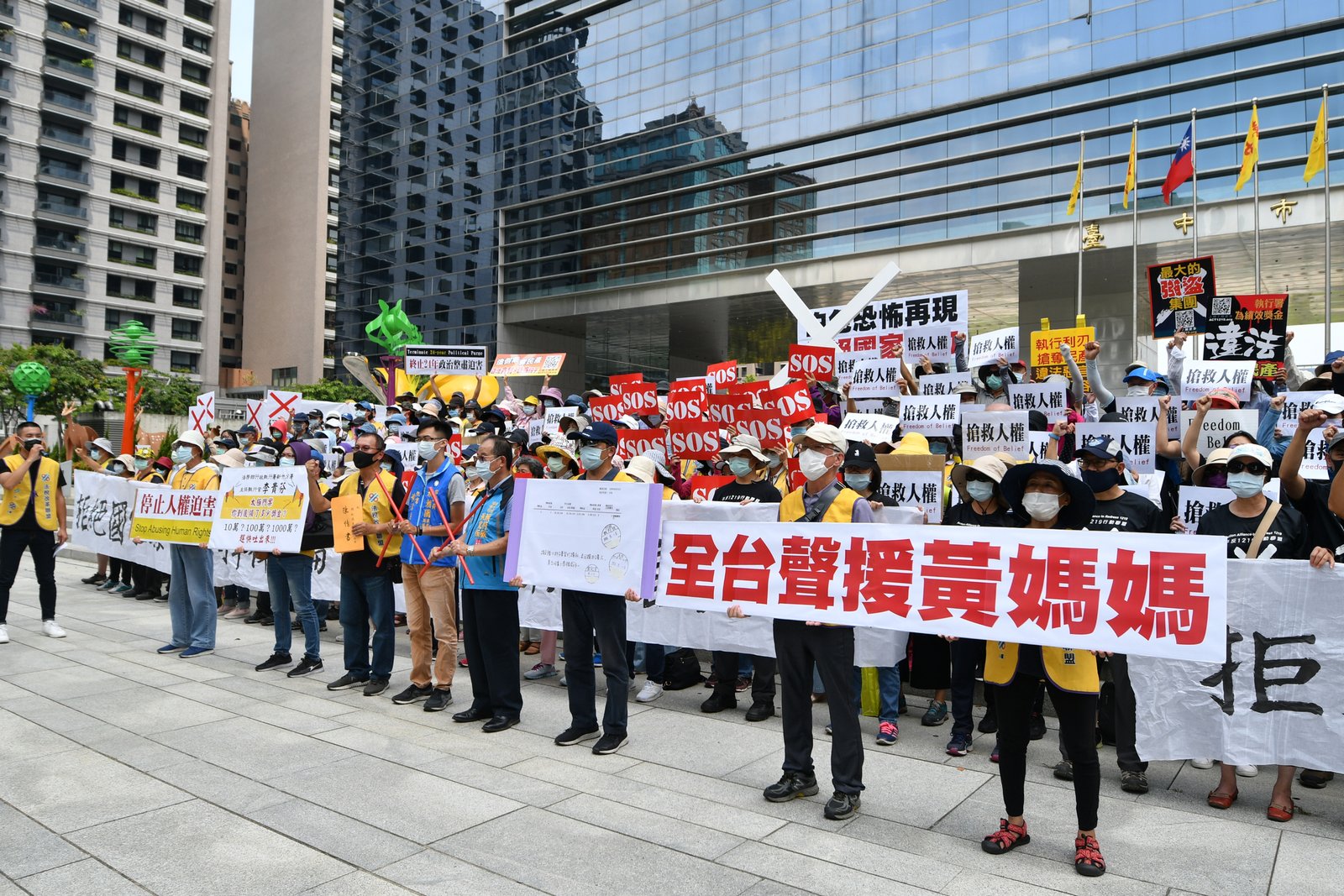
In 1996, the media began portraying them as tax delinquents running financially deceptive activities. They were said to lie and to cheat the tax administration. They were accused of being a cult‑like group, superstitious and dangerous. Reporting was biased or sensationalized, and they were stigmatized publicly.
This harassment and bashing campaign, which lasted for years, deeply damaged their reputation and social standing, even though later court decisions fully cleared the group of any criminal wrongdoing. But in the meantime, Dr. Hong, his wife, and those in charge of the management of the community had been personally vilified in the media and had spent several months in prison despite their innocence.
Tai Ji Men and the dizi survived this ordeal, but the scars are still keenly felt.