
In the drama of the Yenish children unjustly separated from their families in Switzerland, bureaucrats resisted the courts for decades—just as happened in the Tai Ji Men case.
by Massimo Introvigne*
An article already published in Bitter Winter on July 17th, 2026.
*Introduction to the webinar “A Legal Victory, an Administrative Injustice: The 19th anniversary of Tai Ji Men Supreme Court Acquittal,” co-organized by CESNUR and Human Rights Without Frontiers on July 13, 2026.

Nineteen years have passed since the Supreme Court of Taiwan issued its landmark acquittal declaring Tai Ji Men innocent of all criminal charges, including tax evasion. It was a decision that should have closed a long and painful chapter. Instead, it became the beginning of a new one. As we gather for this webinar marking the anniversary of that acquittal, it is important to recall not only the legal clarity of the ruling but also the bureaucratic resistance that followed. The National Taxation Bureau, confronted with a definitive judicial pronouncement, continued to impose illfounded tax bills. Only after years of litigation and public scrutiny did it finally agree to correct all bills to zero—except one, the infamous 1992 bill, maintained on a technicality and used in 2020 as the basis for the nationalization of land Tai Ji Men regards as sacred.
When I reflect on the Tai Ji Men case, I cannot help but recall another situation in which I was somewhat involved, one that unfolded in Europe rather than Asia and concerned a minority whose suffering was long overlooked. In 2011, while serving as the Organization for Security and Cooperation in Europe (OSCE) Representative on Combating Racism, Xenophobia, and Religious Intolerance, I participated in an OSCE country visit to Switzerland to assess its human rights situation. I met with associations representing the Yenish, a community that had endured one of the most grievous violations of human rights in modern Swiss history. The Yenish are a historically itinerant social group found mainly in Switzerland, Austria, and Germany, whose identity is rooted not in a distinct ethnicity but in a shared cultural experience of marginalization, mobility, and craftsmanship. They form a minority defined by social history rather than biological descent, with many members descending from impoverished or stigmatized families who adopted an itinerant lifestyle and developed their own traditions and forms of solidarity.
For decades, Yenish children were forcibly removed from their families and placed in foster homes, psychiatric institutions, or labor settings under the auspices of Pro Juventute, a semistate agency whose actions were justified by discriminatory and racist stereotypes portraying the Yenish as socially unfit. The official figure of Yenish children separated from their families is 590, but records are incomplete, and there may have been some thousands of cases. The program lasted well into the 1970s, and its consequences scarred generations.
Swiss courts had repeatedly ruled that these placements were illegal. Yet the bureaucracies responsible for child services, and Pro Juventute itself, resisted acknowledging wrongdoing for decades. Even after courts finally ended the program, they delayed compensation, minimized responsibility, and often treated the victims’ claims as administrative inconveniences rather than moral imperatives.

I urged Switzerland to recognize what had happened to the Yenish children as a crime against humanity. Although this recognition could not be achieved during my tenure, the process continued, and in 2025 the Swiss Federal Council finally acknowledged the truth, officially declared the placement of Yenish children in foster care a crime against humanity, and issued a national apology. It was a moment of long-overdue justice.
The Yenish case and the Tai Ji Men case are profoundly different in their historical contexts. Yet, they share two structural parallels that illuminate the challenges democracies face when confronting bureaucratic wrongdoing. The first parallel concerns bureaucratic inertia. In both cases, courts spoke clearly and early. Swiss courts declared the forced placements illegal; Taiwan’s Supreme Court declared Tai Ji Men innocent. Yet in both cases, administrative agencies refused to internalize the judicial findings. Bureaucrats continued to behave as if the courts had never ruled, clinging to their earlier assumptions, defending their past actions, and resisting any acknowledgment of having violated fundamental rights.
This inertia is not merely a matter of institutional pride. It reflects a deeper structural problem: bureaucracies often operate with a logic of selfpreservation, and when confronted with evidence of wrongdoing, they may prefer to reinterpret, delay, or ignore judicial decisions rather than admit error. The Yenish case shows how this resistance can last for decades; the Tai Ji Men case shows how it can persist even in the face of repeated judicial victories and public scrutiny.
The second parallel concerns transitional justice. Switzerland is a consolidated democracy that has never experienced an authoritarian period. Yet scholars of transitional justice, including those who have analyzed the Yenish case, recognize that democracies can nonetheless produce systemic discrimination and humanrights violations. The Yenish case is now widely regarded as the most egregious example of such violations in Swiss history. But precisely because Switzerland remained democratic, applying transitional justice principles proved difficult. Transitional justice traditionally addresses abuses committed under authoritarian regimes; when abuses occur within a democracy, the framework becomes less intuitive, and political actors may resist acknowledging that democratic institutions can produce grave injustices.
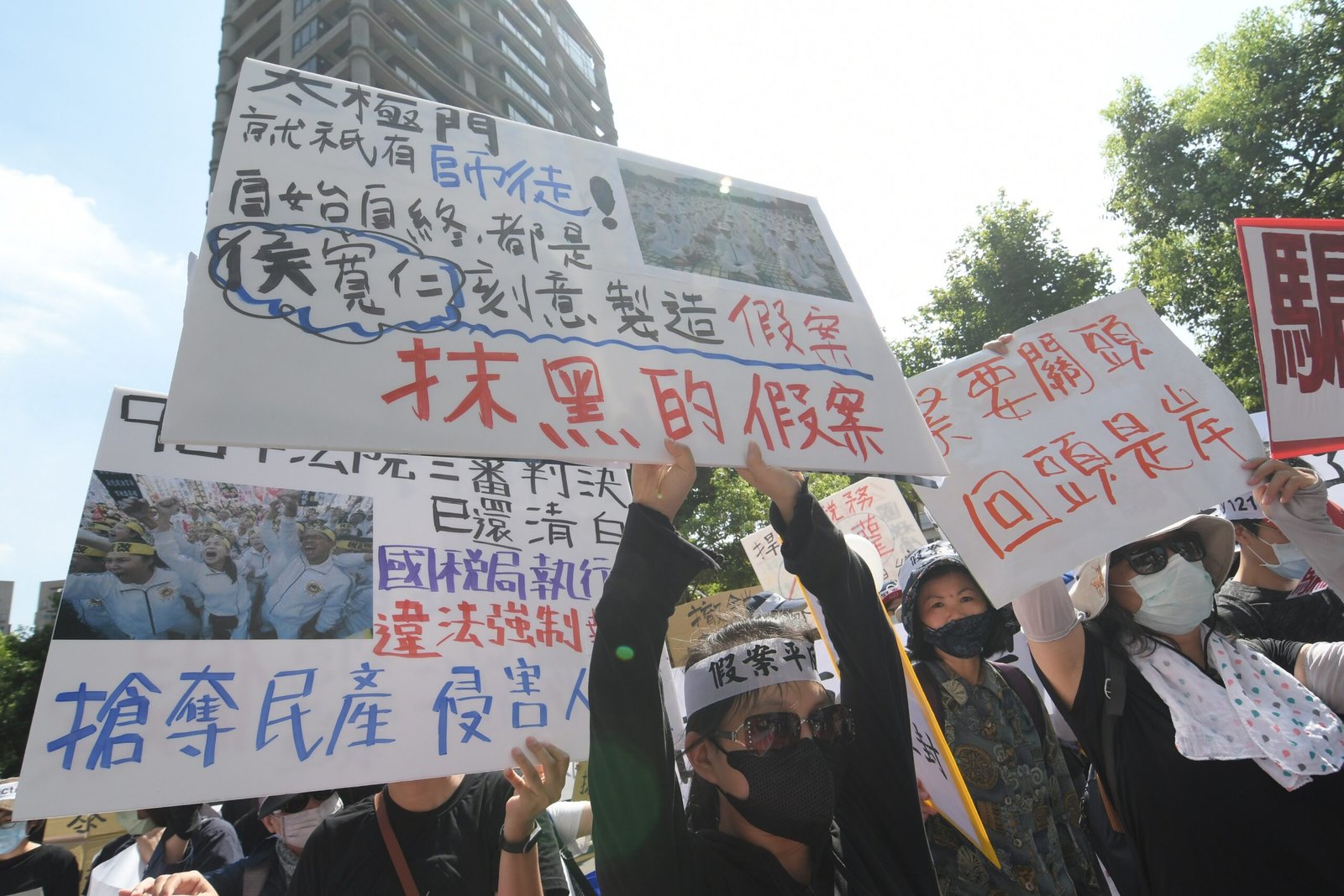
A similar difficulty exists in Taiwan. The island has established transitional justice mechanisms to address violations committed during the authoritarian period of Martial Law and beyond, but only until November 6, 1992. This chronological limit creates a conceptual blind spot. It assumes that once the authoritarian period formally ended, the bureaucratic practices that had enabled human rights violations also ended. Yet the Tai Ji Men case began in 1996, four years after the period covered by transitional justice provisions. It emerged from the same bureaucratic culture that had operated under authoritarianism, a culture in which administrative agencies wielded broad discretionary powers, ignored court decisions, and often acted without meaningful oversight. The persistence of these practices into the democratic era demonstrates that transitional justice cannot be confined to a calendar. It must address not only the abuses committed under authoritarian rule but also the structural continuities that allow bureaucratic violations to persist afterward.
The comparison between the Yenish and Tai Ji Men cases thus highlights a broader lesson. Democracies, whether in Europe or Asia, must ensure that bureaucracies follow court decisions. When bureaucrats ignore them, the legitimacy of democratic governance is undermined. Moreover, transitional justice must be understood not merely as a historical exercise but as a structural one. It must address the legacies of administrative cultures, the persistence of discriminatory practices, and the reluctance of bureaucracies to admit wrongdoing. Limiting transitional justice to a specific period risks overlooking the very mechanisms that allow violations to continue.
As someone who has been involved in both cases—one in Europe, one in Asia—I feel strongly that the lessons they offer are universal. The Yenish waited decades for recognition and apology. Tai Ji Men is waiting for full justice. In both cases, courts spoke clearly, but bureaucracies resisted. In both cases, transitional justice was constrained by artificial boundaries. And in both cases, the victims demonstrated extraordinary resilience, insisting that the truth be acknowledged and that justice be done.
The nineteenth anniversary of the Tai Ji Men Supreme Court acquittal is therefore not only a moment to commemorate a legal victory. It is a moment to reflect on the unfinished work of ensuring that judicial decisions are respected, that bureaucratic inertia is confronted, and that transitional justice is applied logically rather than chronologically. The Yenish case shows that even longdelayed justice can eventually prevail. The Tai Ji Men case reminds us that justice delayed is justice denied, but not justice extinguished. Both cases call on us to continue the work of strengthening democratic institutions, ensuring accountability, and affirming that human rights must be protected not only by courts but also by the bureaucracies that should implement their rulings.