
Two very different spiritual movements were targeted, at different times, by similar forms of repression.
Massimo Introvigne*
*A paper presented at the Fourth World Conference for Religious Dialogue and Cooperation, Skopje, North Macedonia, June 24, 2026.
An article already published in Bitter Winter on June 25th, 2026.
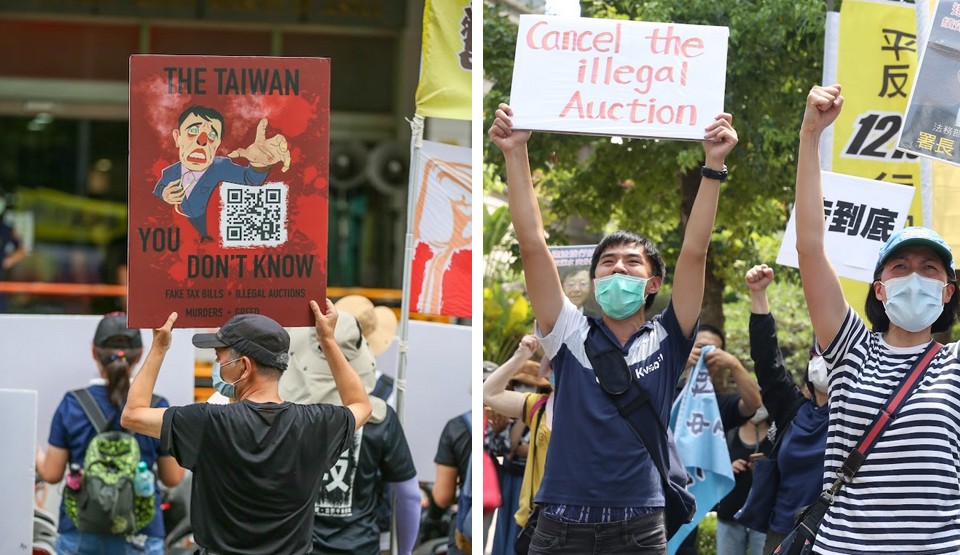
When we examine the Tai Ji Men case today, nearly three decades after its beginning, we are confronted with a paradox. Taiwan is a consolidated democracy, a society that has undergone one of the most remarkable transitions from authoritarian rule to pluralistic governance in East Asia. Its constitution guarantees freedom of religion, conscience, and association. Its courts are independent. Its civil society is vibrant. And yet, the Tai Ji Men case persists—an unresolved wound, a symbol of bureaucratic inertia, and a reminder that the legacies of authoritarianism do not disappear simply because a political system changes its formal structures. The persistence of this case invites us to look backward, to ask whether the difficulties faced by Tai Ji Men are truly unprecedented or whether they echo earlier patterns in Taiwan’s treatment of independent spiritual movements.
This is why the Tai Ji Men case naturally calls for comparison with the New Testament Church and its Mount Zion community. The two movements are very different in theology, structure, and practice. Tai Ji Men is not a religion but a “menpai” (similar to a school) of qigong, martial arts, and self-cultivation; the New Testament Church is a charismatic Christian movement with a millenarian worldview. Yet both share a crucial characteristic: independence. Neither aligned itself with political power, nor sought the patronage of the state, and neither accepted the idea that spiritual life must be subordinated to political authority. In Taiwan’s modern history, this has often been enough to attract suspicion, surveillance, and repression.
To understand the Tai Ji Men case in its full historical depth, we must therefore revisit the story of the New Testament Church, not because the two movements are identical, but because the earlier case illuminates the structural logic that continues to shape state–religion relations in Taiwan. The repression of the New Testament Church in the 1970s and 1980s was not an isolated episode; it was part of a broader pattern in which the state viewed autonomous spiritual communities as potential threats to political stability. The Tai Ji Men case, though unfolding in a democratic era, reveals the persistence of similar assumptions, expressed through different instruments.
The New Testament Church (NTC) emerged in the 1950s and 1960s under the leadership of the Hong Kong actress and charismatic preacher Mui Yee (also known as Kong Duen Yee). Her preaching was unconventional, uncompromising, and deeply millenarian. She proclaimed that God had chosen a new Mount Zion and that the end times were approaching. After she died in 1966, leadership passed to Elijah Hong, a former Assemblies of God pastor who believed he had received a divine mandate to continue Mui Yee’s mission, though not all her followers recognized him. Under his guidance, the NTC established its spiritual and physical center on a mountain in Kaohsiung, which they named Mount Zion.

Mount Zion quickly became more than a place of worship. It was a utopian community, a consecrated land, a site of pilgrimage, and the symbolic heart of a global network of “Offshoots of Zion” in Malaysia, South Africa, Australia, New Zealand, the United States, and the Pacific. The community lived, farmed the land, prayed together, and prepared for the imminent return of Christ. Their theology was radical, their lifestyle communal, and their eschatology intense. But they were peaceful, self-sufficient, and politically disengaged.
This, however, was not enough to protect them during Taiwan’s Martial Law period (1949–1987). The Kuomintang (KMT) regime viewed independent religious groups with suspicion, particularly those that operated outside established denominational structures or attracted followers through charismatic leadership. The state’s concern was not theological but political: any autonomous community was a potential incubator of dissent. The New Testament Church, like Yiguandao, Soka Gakkai, and other movements, found itself under scrutiny.
The first major confrontation occurred in 1974, when the government arbitrarily declared invalid the household registration certificates of Mount Zion residents. This seemingly technical administrative measure had devastating consequences. Without valid registration, residents were treated as illegal occupants (although, paradoxically, they were still required to pay taxes on their homes). Checkpoints were erected. Police raids followed. Members were arrested. Homes were demolished. Property was seized or destroyed. Families were scattered. The community’s physical and spiritual sanctuary was violated.
The Supreme Administrative Court eventually ruled in 1980 that the household registrations were valid, but by then the damage was irreversible. The NTC had already been forced off the mountain. Its members lived in makeshift shelters on the riverbed below Mount Zion, enduring years of hardship, humiliation, and uncertainty. The state’s actions reflected a deeper logic in which the autonomy of a spiritual community was perceived as a threat to political order.
The repression intensified from 1980 to 1986, when police again attacked reorganized NTC communities. This time, the violence was brutal. Members were imprisoned and beaten, some severely. One pastor was nearly killed. Others suffered kidney damage, hearing loss, and long-term injuries. The violence shocked observers, including international Protestant networks. Under pressure from American religious organizations and the U.S. government, Taiwan eventually allowed the NTC to return to Mount Zion in 1987, just as Martial Law was lifted. The community rebuilt its home, and today it preserves its history in a museum that documents both its suffering and its resilience.
Elijah Hong passed away on January 16, 2025. For many years, he was the central figure of the NTC, serving as the interpreter of revelation and the guardian of the community’s theological unity. His death prompted questions about succession, continuity, and the movement’s future. However, the transition proceeded smoothly, astonishing even some long-standing members. On September 7, 2025, the community accepted a revelation that designated Ms. Hsu Li-Chu as the new vessel and Chief Apostle. This confirmed a core belief: the NTC holds that the apostolic lineage, broken after the biblical John and restored through Mui Yee, continues through Hong and now through Hsu. Meanwhile, the question of land ownership remains unresolved.

Why does this history matter for understanding the Tai Ji Men case? Because it reveals a pattern: when the state perceives a spiritual movement as insufficiently controllable, it may resort to legal, administrative, or physical measures to assert authority. In the 1970s and 1980s, this took the form of police raids, forced evictions, and violence. In the post-authoritarian era, when the Tai Ji Men case began, the tools have changed, but the underlying assumptions have not entirely disappeared.
To understand the Tai Ji Men case, we must situate it within the longer continuum of Taiwan’s state–religion relations, a continuum in which autonomy is often perceived as defiance, and defiance as danger. I will propose seven points of comparison between the cases of Mount Zion and Tai Ji Men.
The first point of comparison concerns the continuity of suspicion. Both the New Testament Church and Tai Ji Men were targeted not because they posed genuine threats to public order, but because they were independent. They did not align themselves with political power. In both cases, the state interpreted autonomy as defiance. For the New Testament Church, this meant being labeled a potential source of subversion during a period of political paranoia. For Tai Ji Men, it meant being swept into a politically motivated crackdown in 1996, when prosecutors sought to demonstrate their vigilance against “cults” and “fraudulent” spiritual groups.
The second point of comparison concerns the elasticity of legal instruments. In the New Testament Church case, the state manipulated administrative law by declaring household registrations invalid without a legal basis. The Supreme Administrative Court eventually corrected the error, but only after years of suffering. In the Tai Ji Men case, the state manipulated tax law, issuing fabricated tax bills that contradicted the findings of the criminal courts. The Supreme Court’s 2007 ruling in favor of Tai Ji Men, finding no fraud and no tax evasion, should have resolved the matter, but the National Taxation Bureau continued to pursue claims as if the ruling did not exist. In both cases, the law became a tool of repression rather than a safeguard of rights. The difference lies in the form: authoritarian lawlessness in the 1970s and 1980s, bureaucratic lawlessness in the 1990s and 2000s. But lawlessness, nonetheless.
The third point of comparison concerns the nature of the harm inflicted. The New Testament Church suffered physical violence: beatings, injuries, and the destruction of homes. Tai Ji Men has not faced such brutality. But the absence of physical violence does not mean the absence of harm. Bureaucratic harassment can be corrosive, demoralizing, and economically devastating. The nationalization of sacred land that occurred in 2020, based on a fabricated tax claim, was a symbolic attack on the community’s identity. The persistence of unjust tax claims for nearly thirty years has inflicted a slow, grinding form of violence—one that erodes trust in institutions and undermines the dignity of those targeted.

The fourth point of comparison concerns the role of the judiciary. In both cases, high courts ultimately recognized the injustice. The Supreme Administrative Court ruled in favor of the New Testament Church in 1980. The Supreme Court acquitted Tai Ji Men in 2007. Yet in both cases, the judicial rulings were insufficient to halt the repression. The New Testament Church continued to face police violence even after the court’s decision, and its rights to the Mount Zion land have not been recognized. Tai Ji Men continued to face tax harassment despite the Supreme Court’s acquittal. This reveals a deeper problem: the gap between judicial authority and administrative practice. In both authoritarian and post-authoritarian eras, state agencies exercised a degree of autonomy that enabled them to ignore or circumvent court rulings. This raises questions about the effectiveness of judicial oversight and the resilience of bureaucratic power.
The fifth point of comparison concerns the political context. The repression of the New Testament Church occurred under Martial Law, when the state’s authority was unchecked, and dissent was dangerous. The repression of Tai Ji Men occurred in a democratic era, when civil society was active, and the media was free. Yet the persistence of the Tai Ji Men case suggests that democratization does not automatically eliminate the habits of authoritarian governance. Bureaucratic agencies can retain old patterns of behavior, even when the political system changes. The logic of control can survive the transition from authoritarianism to democracy, adapting to new circumstances and new instruments.
The sixth point of comparison concerns the public narrative. In both cases, the state justified its actions through narratives of suspicion. The New Testament Church was portrayed as a dangerous “cult,” a potential source of instability. Tai Ji Men was portrayed as a fraudulent organization, a “cult,” again, that defrauded its members. These narratives were amplified by the media, which often repeated official claims without critical examination. In both cases, the public narrative served to legitimize state action and to marginalize the targeted community. The difference lies in the medium: state-controlled media during Martial Law and sensationalist, manipulated media in the democratic era. But the effect was similar: the creation of a climate in which repression appeared justified.
The seventh point of comparison concerns the resilience of the communities. Both the New Testament Church and Tai Ji Men survived their ordeals. The New Testament Church rebuilt Mount Zion after its return in 1987 and continues to maintain a global network of Offshoots of Zion. Tai Ji Men continues to flourish, attracting new dizi and expanding its cultural and educational activities. Both movements transformed suffering into testimony, persecution into perseverance. Their resilience is a reminder that spiritual communities can endure even when the state seeks to suppress them.
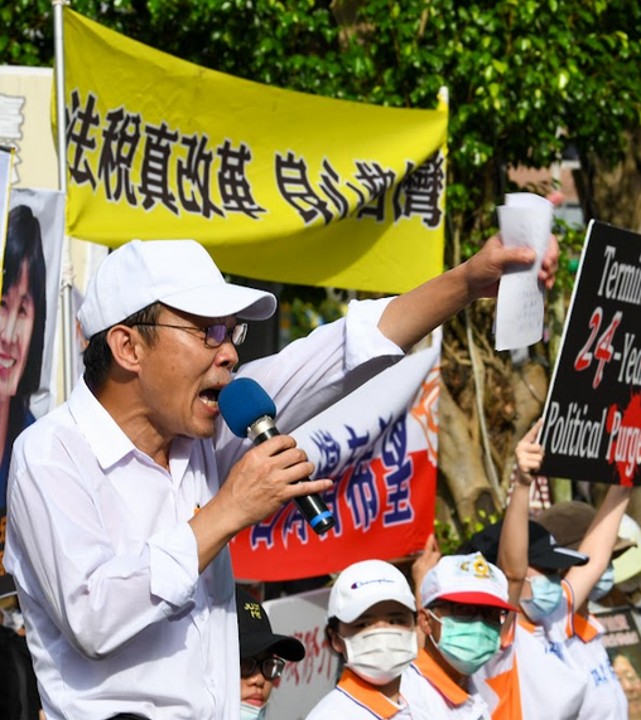
The comparison between the two cases also highlights important differences. The New Testament Church is a millenarian Christian movement whose theology centers on the relocation of Mount Zion from Israel to Taiwan. Its beliefs are radical, its lifestyle communal, and its eschatology intense. Tai Ji Men, by contrast, does not preach millenarianism, require communal living, or claim exclusive access to spiritual truth. The state’s suspicion of Tai Ji Men cannot be attributed to its theology or its practices. It must be understood in terms of its refusal to be co-opted and its symbolic significance as a movement that teaches self-cultivation independently.
In conclusion, the comparison between the New Testament Church and Tai Ji Men, despite their differences, reveals a deeper continuity in Taiwan’s state–religion relations. The transition from authoritarianism to democracy has changed the form of repression but not eliminated its logic. Autonomous spiritual movements continue to face suspicion, legal harassment, and bureaucratic pressure. The Tai Ji Men case is part of a longer historical continuum in which the state struggles to accept spiritual autonomy as a legitimate expression of civil society. Understanding this continuity is essential to addressing the unresolved injustices in the Tai Ji Men case and strengthening the protection of religious and spiritual freedom in Taiwan today.